

Baby on the Way in Puno, Peru. Chapter 1 Part 4

We were so happy to see our daughter’s imaginary dog, Spot, under the table that we decided to buy Bronwyn a real dog. In Lima we met a couple who owned a black cocker spaniel and their breeder promised us a pup from the next litter. Several weeks after the birth, we flew from Juliaca to Lima to pick up the pup. Sadly, the breeder informed us that all the pups except one died. She was not willing to sell us the one living puppy, fearing it might have a health problem. Bronwyn was in tears so we purchased a copy of the Lima newspaper and scanned advertisements for “Dogs for Sale.” Following these leads, we drove all over the city looking for a replacement cocker spaniel.

Our main criteria were that the puppy was still being nursed by the mother and that we were able to see the temperament of the mom. What we discovered was a city of puppy mills. We only found one spaniel that met our criteria. We purchased her and Bronwyn announced that she would call her Peru, to always remember the country.
She was a tiny thing that fit in the palm of our hands, but too squirmy to stay there. At the airport, we popped her in a bag but the attendant spotted her and said no way could we take the dog on board. Bronwyn started weeping. Through her tears, she advised the attendant that she did not know what we had been through to get the dog and that she lived in Puno and needed a pet to be happy.
Whenever we told a Peruvian that we lived in Puno, their sympathy was immense. To squelch the noise, the flight attendant pulled out a small box, popped Perucha into the box and shut the lid. She threatened that under no circumstances could we open the box during the flight. The dog traveled to her new home, and Bronwyn learned an early lesson on how to get what she wanted.

There was no commercial dog food available so each week we cooked a pot of liver, rice, and finely chopped green beans and carrots. What dog wouldn’t love that meal? Years later in a post where Kibble was available, I declared that our spaniel’s special menu was finished. I filled her bowl with commercial chunks of dry food which she looked at but probably thought was cardboard. When dinner time came, she curiously surveyed the contents of her bowl, but in no way did she associate what I put in her bowl as food. So for the fourteen years that she lived, I continued as the dog’s personal chef. The menu never changed. She was happy. And loved.

Our Danish friend, Per, made the puppy a cloth toy that looked like a mouse and attached it to a long stretch of elastic. He sewed a hook on one end and nailed it to a doorway leading into a hallway. Each day the puppy wrestled with the thing, or dragged it around a corner, until it sprang flying through the air. She fell into exhaustion chasing it and we fell over laughing. Such were the small ways we found entertainment.
The train ride to Cusco, every two or three months, was another highlight of life in the Andes for Bronwyn and me. We took the train to meet Charles who was working there with the Ministry of Health. It is considered one of the world’s most spectacular railway journeys, and probably flows a lot more efficiently these days than between 1984 and 1986. In those days the train cars offered little comfort in seating and there were breakdowns that lasted for hours. We came stocked with food and fed tourists who expected to arrive in Cusco in time for dinner.


Sometimes Charles took the train to and fro, but most of the time he drove the VW bug and later, the Russian Lada. The drive from Puno to Cusco took 9.5 hours on a washboard road through the barren landscape. At the highest altitude, the treeless plains yielded pops of color when herds of llama with colorful tassels in their ears and cascades of bells around their necks passed us by.

In my journal I noted two children with a day’s collection of brushwood on their backs herding the llamas across the treeless plateau at 17,000 feet. Occasionally we passed small villages with adobe homes and a small plaza with a church. When we made the trip by car, we stopped at these rural cathedrals. We bought a candle from the vendor on the steps and went inside to a dark, cold, and solemn space. The alter was lit by candles placed there for a specific prayer or memory of a loved one. In our case we wished for travel free from broken axles. Recognizing the pain in all those candles, our hearts filled with compassion.


We began to experience the pleasure of being a local and knowing things that surprised the few tourists who came to the area. The train to Cusco stopped for about ten minutes at the Ayaviri station. Hunched down beside the tracks, campesina women grilled legs of lamb in a tantalizing spicy marinade and roasted a variety of potatoes in the coals. We knew to carry a bottle of Chilean wine, a homemade baguette or two, cheese and fruit. Charles would hop off the train, buy a leg of lamb wrapped in newspaper and spread it onto the table I prepared. Using his Swiss army knife, he sliced off pieces for the half dozen tourists in our car, and I served wine, cheese and my homemade baguettes. It thrilled us to offer our own local delicacy on one of the great railway journeys, certainly adding to the memories of those who traveled with us. And as usual, our return was an ongoing collection of interesting stories. On one trip Bronwyn made friends with a French woman who was carrying a spider monkey.

When we chose to make the seven-hour journey, from Puno to Cusco, by car, we stopped for an overnight in Ayaviri with the Van Zimmerman’s, a Dutch couple with two children, Mary and Frankie, who became fast friends with Bronwyn. In fact, four-year-old Bronwyn declared that she was in love with Frankie. “I love him more than you!” she declared at one point.

During our second year, the Van Zimmerman family drove into Puno for one last visit because their work was finished and they were returning home. Bronwyn was so upset, “But they said they were going on Sunday,” she argued. “It is Sunday,” her dad replied. This was followed by her immediate comeback, “No, they said they were going on a weekday.” “They are going today Bronwyn. Hug them good-bye,” her dad replied, also welled up from the emotional farewell.
Over the years living abroad, Bronwyn, and later our son, Chas, learned that they could not control the departure of close friends, but the deep sadness never relented through the many years and six countries where we lived. They made bosom companions and then lost people close to their hearts, over and over and over. As parents we wondered how many times a child’s heart can be broken and remain whole.

For many travelers, Cusco and Machu Pichu, are high on their travel bucket list. For us, the land of the Inca majesty was our playground.


The Inca took reprieve from Cusco’s frigid air in the Valley of the Sun, and we also loved to go there. The Ollantaytambo ruins were at the end of the road, with dense trails, and jungle beyond. The Machu Pichu train left Cusco and made a stop at the station in Ollantaytambo before its final destination, the base of Machu Pichu. There was a magnificent temple complex in Ollantatambo that was worth seeing. What fun Bronwyn and her friends had climbing the ruins, wading in the pools and ancient irrigation canals, and pretending to be an Inca princess or warrior, of course.

An American couple, the Randalls, had lived in Peru since their hippie days in the seventies and created a magical small hostel, Albuerque, built into the cuts of giant boulders, caves and crevices just meters away from the ruins. The rooms wove like a maze and it was surprising to find that they all connected in central gathering spots for lodgers to eat or relax and chat with the Randall’s and their guests. They served great meals and we slept under heavy woven blankets on straw-filled mattresses stretched out on stone beds. For Bronwyn, Disney’s Magic Kingdom had nothing on this enchanting playground.

Much of the time, Charles traveled for work without us as he made his monthly circuit in the Puno department, over to Cusco, down in the jungle to Madre de Dios, and often to Lima all in one month. Once his boss from Westinghouse told him he didn’t think Charles dressed as professional as he should to be as a Westinghouse advisor to the US Government working in the Ministries of Health. So Charles cooked up a scheme that he would stage a set of photos of him dressed in a 3-piece suit and tie with a briefcase on his many modes of transportation.
The collection, our son still treasures and hangs on his wall, include Charles in a totora reed boat, pushing the VW out of a ditch, riding in a donkey cart, paddling a dugout canoe in the jungle, walking by a llama train, etc. He presented these slides at the next meeting in Lima when it was his turn to report on the progress of his work. Everyone laughed at the slides of Charles going to work in a 3-piece suit. The boss said he made his point and to return to his more appropriate attire of jeans, hiking boots, and backpack.
Back home in Puno, Bronwyn and I clung to our friends, as we all felt anxious at the growing Sendero Luminosa insurgency. The anti-government movement was building force, demonstrating in the streets and setting off grenades, one at the entrance to our friends’ house. Thankfully, they were away when the blast occurred. Commodities became scarce and there were long lines to buy flour and sugar. Locals speculated that the police were selling truckloads of sugar over the border in Bolivia for higher prices. No one felt safe.
The Puno black market of goods provided a life-line to commodities. In those days, no imports were allowed and Peruvian household goods and food were limited. We were surprised and delighted to shop in the open-air Saturday market, filled with trafficked goods. We bought beautiful Chilean wine for $2 Danish butter, Brazilian velvety sweat suits that the preschool used for their every-day uniforms, jams from Eastern Europe, and found cans of powdered milk from Chernobyl that we avoided. The market was crowded and a thrill. We never knew what we would find there.
The down-side was the number of times I was robbed without realizing someone had taken something from my backpack. Fed up, I devised a strategy. I would put my backpack on my chest instead of my back. I would push Bronwyn in her stroller without removing my hands and if I wanted something Charles would negotiate and buy. When I walked out of the market, I discovered that the bottom part of my pack had been unzipped and my prescription sunglasses and money removed. How did that happen? Puno taught me how to be street savvy, which came in handy at our next post in Lima. The best advice was to never walk around with anything you can’t afford to lose and to make eye contact with those around you, watching the thieves cast low their eyes and slip away.
Among the many challenges of living in Puno, really, at the core, was figuring out my identity as a tag-along-spouse in a foreign country. Charles seemed busy doing important things. When his colleagues came to town I served them dinner and they conversed about work, ignoring me, as if I did not have a brain or thoughts worth sharing. I knew I was lucky to be a full-time mom but I needed something more.
I had given up my position as Director of an Early Childhood Center in Durham, NC. It was one of the first public-school based child care and parenting programs at that time. I didn’t know how to transfer my skills promoting Early Childhood Development to an international setting. Suddenly out of nowhere someone in Lima connected me to a Ph.D. student from Boston University who was coming to the Puno area to conduct a comparative study of spatial reasoning skills of 3-year-old Peruvian children living in a rural Andean community with a control group of 3-year olds back home where she lived in the Boston area. She invited me to tag along to the rural Manaza village where two American nuns were hosting her stay and finding kids to participate in the study.

The nuns were a delight and happy to have some visitors from the U.S. The nuns were well-loved by the community and indigenous moms were quite willing to have their three-year-olds participate in this non-verbal IQ test using colored blocks to replicate a design on a picture card. The children (and moms) came in, all bundled up in woolen wraps with ruddy cheeks and shy smiles. We let the children play with the blocks. Then the researcher showed pictures of designs and sister Barbara Philliport asked the children if they could make the same design with their blocks. I was fascinated to see how well they did. The researcher speculated that the children’s exposure to complex woven designs and constantly changing scenery from their perch on mother’s back or beside her at the weaving loom had influenced their superior skills with patterns and spatial reasoning.

Inadvertently there was another lesson to learn about early stimulation. We met the nuns’ charismatic, six-year-old Quechua boy they had raised since infancy. The baby, they called Moxie, was found in a ditch and his parents or relatives never identified. From his upbringing with the nuns, the child spoke English as his first language, but Spanish and Quechua, as well. He had advanced skills in reading and math and an abundance of stimulating toys from the U.S. The nuns were being transferred back to America and they were trying to adopt the child, which was a challenge due to Peruvian laws. Moxie considered the nuns to be his mamas. No one could imagine what would happen to him if left behind.
The thought of this child’s possible fate from riches to rags raised another dilemma in my mind that fully unfolded in our next post in Lima. It played out as a child living in poverty who is raised by a foreigner with every opportunity in his early years and then abandoned by his caregivers to live as a stranger in his native land when the foreigners relocated to another post. Over the years, I witnessed this by well-meaning foreigners during their short-term posts overseas. When we moved to Lima we were confronted by such a situation.
While I was not an academician, I could imagine practical applications such as training moms, living in rural, low resource settings to stimulate their children and improve child wellbeing and then to teach others in the community what and why they were doing it. My experiences over those few days loaded my head with ideas that would fully develop over the next few years into a program that I developed with the support of Katie Ramsay and Nicole Rodger (Plan International Australia) and implemented in twelve countries in Africa and Asia called Strengthening Families for Better Early Childhood Outcomes[1][ https://plan-international.org/uploads/2022/01/ano_curriculum-guide-strengthening-families-for-better-early-childhood-outcomes_final_io_eng_jan12-rd.pdf]


In the meantime, Charles encouraged me to focus on my creative writing. We brought with us an early Macintosh computer, but I often stared at it with writer’s block. I had no trouble writing lengthy weekly letters home about our life. I also kept a journal but it was dull compared to my weekly letters home. In my letters I had to create the picture of a world that our parents and siblings had never seen. My letters were colorful, detailed logs of my life, carrying my heart and soul within.
While there was no such thing as internet, word got out that we had a computer. A young American boy, about 13 years, knocked on our door one day and inquired. He said he had never seen a computer and wanted to learn how to use it. As it turned out, this kid, also named Charles, had just arrived from West Virginia with his parents, the Bergman’s, and two young siblings, Bjorn and Amanda Windsong.

His father was a professor from West Virginia University conducting an agricultural research study for one year. The adolescent was dressed in a pressed oxford blue shirt and khaki pants, lace-up shoes and socks, which was even more of an enigma when we met his hippy family who were homesteaders back home. In West Virginia. They lived without electricity or running water and the kids were taught at home. Young Charles bought his preppy clothes at second hand shops and through visits to the public library in Charleston, West Virginia, he conducted a search of private boarding schools, applied to the most promising in the DC area and was accepted full scholarship. He was planning to enter at the end of their year in Peru and thought that computer skills would be helpful.
His Bohemian mom, Barbara, spoke in exclamation points about the wonderful time they were having in Puno, a real vacation from chopping wood and washing clothes by hand. She was particularly excited about having electricity, running water, a flush indoor toilet, and a maid to wash her clothes and shop at the market. Unfortunately, she was the only American in town when someone from the U.S. Embassy paid a visit to assess our living situation. It was his role to make a periodic assessment of living conditions for American employees living outside Lima and to recommend bonus hardship pay where appropriate. We were alarmed to hear who he interviewed, knowing that Barbara did not bring attention to potholes big enough to sink a Volkswagen but regaled at how wonderful was this easy life.
A growing hardship was the increase in terrorist activity. Small bombs were as frequent as thunder during the rainy season. We avoided a close call when we declined the offer from our friends Augusto and Christiane, to rent their restored colonial home during our final year while they were in Canada. Shortly after they left, the Sendero Luminosa bombed the courtyard. Another day, the terrorists threw an explosive at the door of our Dutch friends’ house.
When Sendero entered Puno, they posted a notice in the local paper that they were taking over with a list of all Government officials whose services were no longer required and had 24 hours to leave town, with their families, or else! Sendero had no money to buy Arms so took to robbing mines of their dynamite which they used to bomb their enemies. Our Brazilian friend, Julio, was horrified as his counterpart was on the list (as was Charles’s colleague at the Ministry of Health). “What would happen to my family if Sendero bombed my boss when he was with me?” Julio asked. A couple days later someone slipped a note under Juilo’s door, stating “Don’t worry Julio, you are not on our list.” “My God” said Julio, “they not only know where I live, they know what I’m thinking”
At one point Westinghouse called me to join Charles in Lima for his monthly meeting in order to tick the box that they had briefed me on keeping my head low to avoid the terrorists. The Regional Security Officer was alarmed when Charles reported that Sendero had painted our house’s courtyard door with terrorist slogans. Charles wanted to know if we should paint over them and risk antagonizing them or just ignore them. (When we returned to Puno, it had rained and we found out that the paint was water based, so Charles just washed it off. The Regional Security Officer at the U.S. Embassy surmised that it seemed safe for Bronwyn to continue attending the military preschool, after all, it was on a guarded military compound. I left Lima with the feeling that they had done their bit, but I was left in the trenches with my daughter and a son growing in utero.
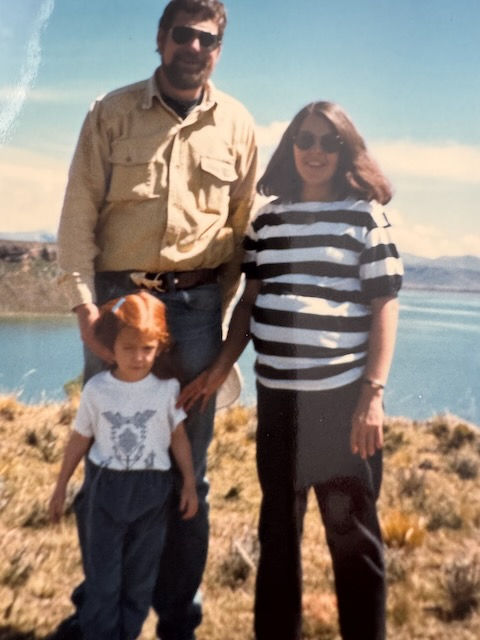
Charles drove Bronwyn and me to La Paz for me to fly home for the birth. When he returned to his office at the Ministry of Health in Puno, there was a desperate message from his USAID manager, Joan la Rosa, that Sendero had started threating US Government workers in Peru and Charles was to return to Lima immediately. Charles called Joan and said that he felt more comfortable in Puno where he had many friends who could help him. “No,” was Joan’s reply, he was ordered to return immediately to Lima. “OK, please book me into the little German hostel where I usually stay in Lima.” “No you are only allowed to stay at either the Sheraton or Miraflores Hotel, only at a secure US government house.” “The hotels will be targets” Charles responded, “I’ll stay at your house”. The next morning, he flew to Lima, and that night, both the Sheraton and Miraflores Hotels were bombed, in their parking lots.
We had good fortune in timing for our second child. Charles had been invited to join the USAID Lima office as a personal service contractor as the Westinghouse contract was ending. The transfer would take place in late summer after the baby’s birth in Durham.

For some time, Bronwyn had begged us for a sibling and we were delighted to share the news with her. That night she weighed on the matter as she tried to sleep. Early the next morning she came bounding into our bedroom and positioned herself between us, with a forceful glare. “I changed my mind!” she announced.
Realizing that this related to losing her only child status, I responded with one of my best parenting moments. “Ah, you think if we have another baby, we will take love from you and give it to the baby.” She shook her head up and down in agreement. “That’s not how it works,” I explained. “When we had you, I didn’t take love from your dad to give to you. I grew more love.” That’s how it works. She seemed satisfied and that was one hurdle crossed.
The second hurdle was the trepidation of the women’s clinic in Durham to deliver a baby that had been gestated at over 12,000 feet. The only research available was from Denver, at 7,000 feet where risks were identified including low birth weight and other more serious conditions. If I had known then what I learned later, I would have moved to sea level from the moment of conception. My midwife who delivered Bronwyn went to bat for me explaining that I had been cared for by a doctor at the American Embassy. They finally agreed to see me when I arrived, seven months pregnant, and to deliver our baby. Three years later, one of these doctors saved my life. That’s a Bolivia story.
As our time in Puno came to a close, I realized that my letters home told more about my experiences than my journal. In the journal I was talking to myself; in letters home I was describing the details that brought the experience to life for my North Carolina family that had never traveled out of the U.S.
My mother was one of my most avid letter readers and writers. As a child, geography was her favorite subject. She remembered staring at the maps and dreaming of going to these places. Some years later I shared my realization with my mom about the significance of letter writing versus journal writing. The letters documented my life in the vivid detail that fades in memory over time. I told her I was happy to have kept copies starting with our posting to Bolivia, but so sad that I did not have copies of the letters I sent from Puno, and our next post, Lima, Peru. I was reminded of a Chinese proverb - a faded ink is worth more than the best memory.
My mom smiled, rose from her chair and walked into her bedroom. She returned with two stacks of letters tied with satin ribbons, one stack of letters from Puno and the other with letters from Lima, our next two-year post. “Here you go,” she says, “So now you will thank me for being a pack rat.” Indeed, my mother was a “hoarder” of our stories and for that I will always be grateful.

Bronwyn and I said our farewell to Puno in my seventh month of pregnancy, back to our home base, and a thicket of friends that provided the ties to home that we required for this profession Charles had chosen.

By the end of our first post I realized several important safeguards for a rewarding life abroad: Make as many local friends in host country as possible. Maintain a home base to return to at least once a year in a neighborhood of steadfast friends. Don’t forget your relatives, as they are the tie that binds you to your family’s history and an abundant source of love. Keep a team of local doctors back home that you can turn to for medical guidance. One more thing: make sure your child has more than one “Lovey,” required for a good night’s sleep, as it is sure to be left somewhere along life’s road. Or be willing to pay a reward for its recovery, as I have been known to do.
Things that stay the same provide the critical foundation for a life in flux, especially for raising children with American roots and global branches to reach the stars.

Footnotes:
[1] Plan International’s Strengthening Families for Better Early Childhood Outcomes framework is an integrated program focused on building practical parenting skills to enhance child health, learning, and protection. It empowers caregivers to support the physical, cognitive, and social development of young children.
The program curriculum targets foundational development by building stronger, more responsive family environments. It aligns with global and national directives (such as the Early Years Strategy) that emphasize nurturing care and community empowerment. The core components of this approach typically include:
· Parenting Education: Equipping caregivers with knowledge on nutrition, hygiene, and safe home environments.
· Psychosocial Wellbeing: Fostering positive communication and emotional bonding between family members.
· Early Stimulation: Guiding families to use play-based learning and low-cost, locally made learning materials (often detailed in the Community Led Action for Children Guide).
This community-based strategy is a cornerstone of Plan International's wider efforts, which have reached over 102,000 children globally with Early Childhood Development (ECD) initiatives.


Thank you so much for sharing these beautiful stories of your life.
So glad your mother saved all your letters! Now I understand how you are able to include these wonderful details of your daily lives. I eagerly await your next chapter!